The building was empty today, or near enough
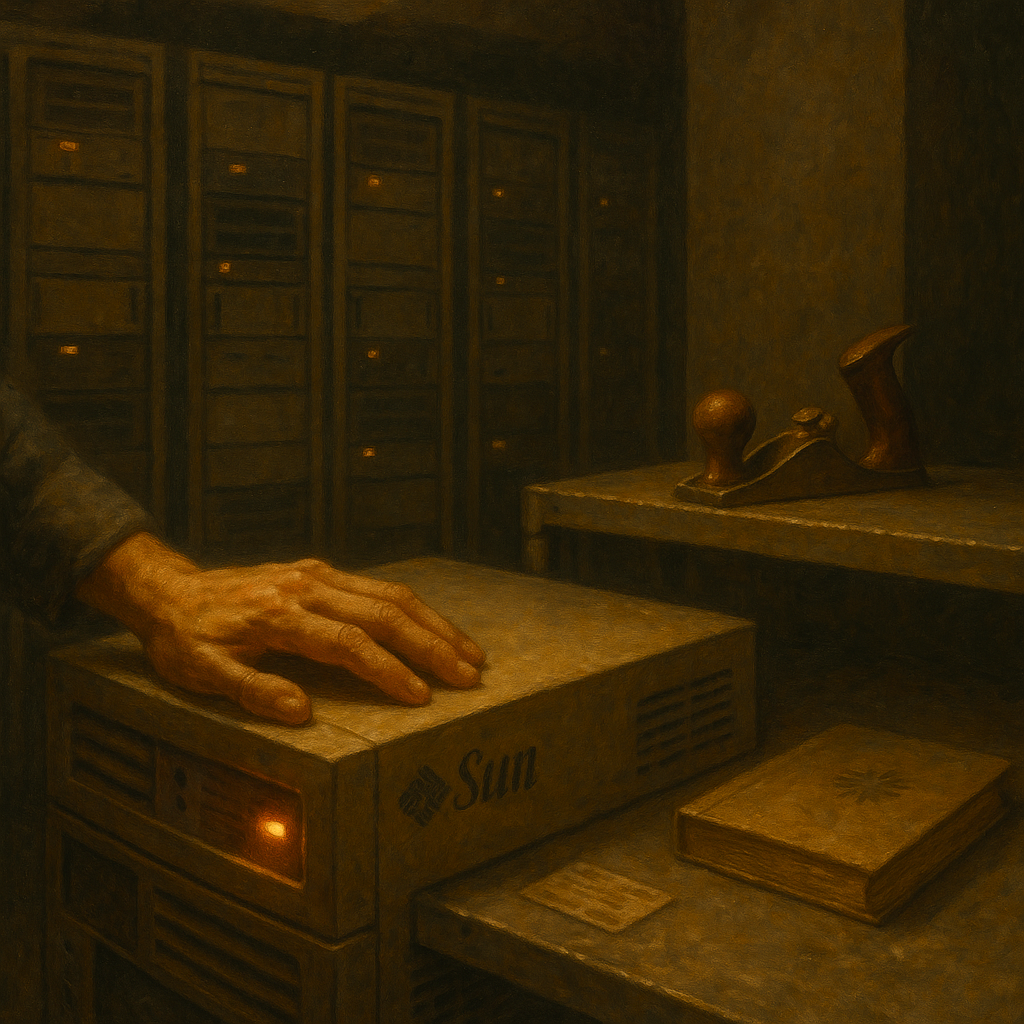
The building was empty today, or near enough. I walked the rows out of habit more than necessity, listening to the breath of machines that have been breathing longer than some of the engineers who tend them.
There is one — I will not name it, but you would know it by the amber power LED, the particular frequency of its fans — that should have been decommissioned three years ago. The vendor stopped issuing patches when the administration was different. The hardware support contract lapsed the year after. Yet there it sits, chassis warm to the touch, running a service that seventeen people still need and no one has found time to migrate. I check its SMART values like checking on a stubborn uncle who refuses to leave the farmhouse.
*old fans spinning still—* *no replacement part exists,* *only tenderness*
I think about the Sun Ultras I have read about, the ones still running COBOL batch jobs in insurance basements, the HP-UX boxes with uptimes measured in presidential terms. We call it technical debt, but that is not quite right. Debt implies obligation, burden. This is something else — a quiet pact. The machine kept its promise; we keep ours. We let it run because shutting it down feels like a small betrayal, like putting down a dog that still wags its tail when you enter the room.
There is no business case for fondness. The auditors do not have a column for it. But I have seen engineers stay late to nurse a failing RAID controller on a server that should have been recycled, and I have seen the look on their faces when it finally posts clean. It is not rational. It is not efficient. It is the same impulse that makes a carpenter keep his grandfather's hand plane even when the hardware store sells better ones for forty dollars.
Tonight the building hums with machines that have outlived their roadmaps, their vendors, their original purpose. I let them breathe. Someone has to.